Thu. (mid-afternoon) 22 — Mon. 26 October 2026
Rochefort-du-Gard (near Avignon), France



Introduction
The Ethics Education Program of UNESCO is mapping existing teaching programs in the area of ethics in the Member States of UNESCO. The various programs are described, discussed in expert meetings, and made available in the Global Ethics Observatory (www.unesco.org/shs/ethics/geo). Experiences concerning the contents, intensity, methods and materials of existing programs are therefore publicly accessible and can be exchanged among experts. Teachers who want to initiate ethics teaching can find suggestions and ideas in the database. The quality of ethics teaching programs, however, also substantially depends on the quality of the teachers. Ethics teaching can be made much more influential and attractive for students if they are involved by a highly qualified, stimulating and inspiring teacher.
This course is set up to provide training to ethics teachers with the purpose to enhance their skills and abilities. It aims particularly at training a younger generation of teachers so that ethics teaching programs can continue to expand and improve in all countries.
Seminar objectives
- Identify educational needs and formulate learning objectives for ethics courses and other educational offerings on ethical themes
- Critically explore different methods of teaching ethics
- Incorporate a variety of effective teaching tools, including relevant readings and assignments, into educational programs
- Improve one’s own teaching skills by receiving feedback from fellow-teachers
Methods of instruction
Whereas internationally renowned experts in ethics will introduce various themes, the core of this seminar will be a sustained conversation and critical debate among all participants, with ample time for personal reflection and cultural enrichment.
Submissions by participants
Each participant is invited and indeed encouraged to prepare a short presentation, to be given during the seminar. While this presentation may cover a completed ethics education project, the primary purpose of these breakout sessions is to discuss upcoming teaching assignments, ongoing innovations, or any other ethics education related endeavor that will spark discussion. Participants may also “try out” a particular teaching method, with the other participants serving as the “students”, who will then provide feedback on the effectiveness of that particular method. For each participant-led session, at least 45 minutes will be set aside.
Educational team
- Jos V.M. Welie, MA, MMedS, JD, PhD (Seminar Director). Founding President of the St. André International Center for Ethics and Integrity (France); Professor Emeritus of Medical Humanities at Creighton University (USA)
- Bert Gordijn, PhD, Professor and Director of the Institute of Ethics at Dublin City University in Ireland (Ireland)
- Henk ten Have, MD, PhD, Research Professor at the Faculty of Bioethics of Anahuac University (Mexico / Netherlands)
- Angelika Krebs, PhD. Professor of Practical Philosophy, University of Basel (Switzerland).
- Linda Scheirton, PhD, Professor Emerita, Creighton University (USA) & Co-Founder, Chateau Saint André Center (France)
- Tristan Welie, BA, Cultural Programs Manager, Chateau Saint André Center (USA/France)

J. Welie 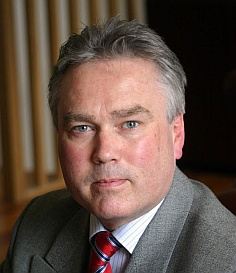
B.Gordijn 
H. ten Have 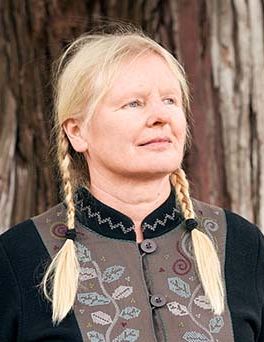
A.Krebs 
L.Scheirton 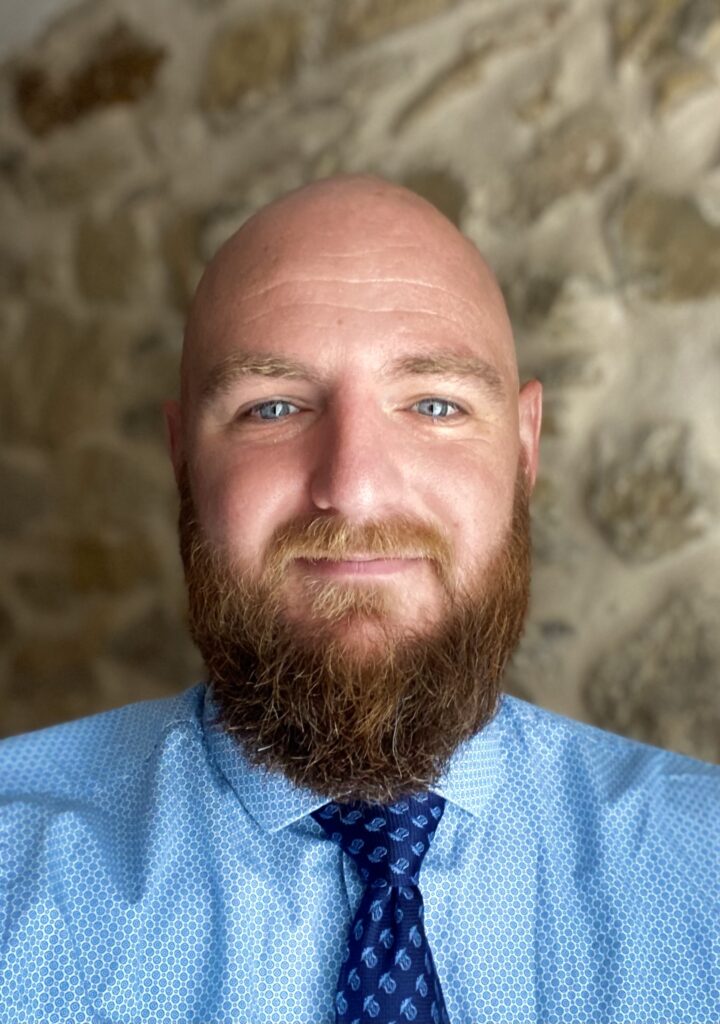
T.Welie
Program
DAY 1: THURSDAY
Early afternoon
Pickup, arrival and registration
14:30 – 15:00
Welcome and introductions
15:00 – 16:30
General introduction to the workshop / Dimensions of ethics education
16:30 – 17:00
17:00 – 18:30
Break
Happy Hour & exchanging teaching experiences
18:30 – 20:00
Dinner
20:00 – 22:00
Optional visit of the Pont-du-Gard
DAY 2: FRIDAY
9:00 – 10:30
Teaching in different disciplinary contexts – Clinical ethics, business ethics and technology ethics.
10:30 – 11:00
Coffee break
11:00 – 12:30
Participant presentations
12:30 – 14:00
Lunch
14:00 – 15:30
Ethics course design: From objectives to assessment
15:30 – 16:00
Coffee break
16:00 – 17:15
Keynote lecture / Angelika Krebs: Environmental ethics between ethical theory and ethical practice.
17:30 – 18:30
Visit of complex and its on-site museum
18:30 – 20:00
Dinner
20:00 – 22:00
Optional visit of the Pont-du-Gard
DAY 3: SATURDAY
9:00 – 10:00
10:00 – 11:00
Getting students out of their bubble
The “Ethics Lense” as a teaching tool
11:00 – 11:30
Coffee break
11:30 – 12:30
Participant presentations
12:30 – 14:00
Lunch
Afternoon
Optional excursion (to Avignon or Villeneuve-lès-Avignon)
Evening
Dinner on your own
DAY 3: SUNDAY
9:00 – 10:30
Teaching ethics online
10:30 – 11:0
Coffee break
11:00 – 12:30
Participant presentations
12:30 – 14:00
Lunch
14:00 – 15:30
Assessment of competencies gained
15:30 – 16:00
Coffee break
16:00 – 17:30
Participant presentations
17:30 – 18:30
Break / Happy Hour
18:30 – 19:30
Walk down to Rochefort-du-Gard & visit of the village
19:30 – 21:30
Dinner in Rochefort-du-Gard
DAY 5: MONDAY
9:00 – 10:00
Participant presentations
10:00 – 11:00
Making the case for curricular time for ethics education
11:00 – 12:30
Coffee break & time to pack
12:30 – 14:00
Closing Lunch
Afternoon
Departures
Language
The seminar is held in English. There will not be simultaneous language in other languages. However, non-native speakers should not hesitate to enroll, as long as they have solid conversational competency in English. The members of the instructional team are either non-native speakers themselves, or have extensive experience working in other countries and conversing across language barriers. What matters is a willingness to engage in the discussions and not be worried about linguistic imperfections.
Certificate
Each educational program of the St. André International Center for Ethics and Integrity is assessed by its Board of Directors, consisting of highly experienced educators from various of universities around the world. Participants will receive a Certificate of Completion.
Meeting location and travel
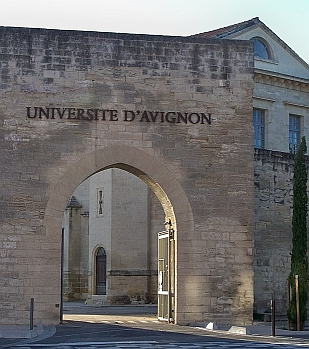
The Colloquium will be held at the Notre Dame de Grace Retreat Center, located in Rochefort-du-Gard, 15 minutes west of Avignon. The staff of the Chateau Saint Andre Center will pick up each participant on the first day in Avignon to be taken to the symposium site.
You will be picked up at one of three locations:
- The Avignon TGV train station. This is where the direct high speed trains from the Paris CDG airport arrive and from the Gare the Lyon train station in Paris downtown. It is also where direct daily trains from several other major cities arrive (incl. Lille, Lyon, Brussels, Frankfurt, Geneva, Barcelona, Madrid).
- The Avignon Centre train station. As the name indicates, this station is located in the center of Avignon, just outside the medieval city walls. Some trains from downtown Paris arrive at this station, as well as trains from the Marseille airport and from the Nice airport.
- Your downtown Avignon hotel/B&B. If anybody elects to spend extra days before the start of the symposium in Avignon to explore the city and any additional highlights in the area, you will be picked up there (or as close as we can come by car).
French intercontinental airports include Paris CDG, Nice, Lyon (only Canada, Africa and Asia), and Marseille (only Canada and Africa). All of these airports also have direct connections to other major airports in Europe as well as the Middle East. We will be providing you by email with more detailed information about travel to the conference site.
If you are coming by train, book your train tickets early. You may not be able to book until 3 months before your travel, but do not wait until a week before since French trains do fill up, particularly in the summer.
Should you desire to rent a car, the Avignon TGV station has offices of all major car rental companies.
The staff of the Chateau Saint Andre Center will send some more travel info (particularly about train connections) by email, and assist you with you particular travel plans. Please email to info[[at]]chateausaintandre.center to discuss your travel plans.
Lodging options
The retreat center where the Colloquium will be held has 26 guest bedrooms available. A few are single rooms, most are set up as double rooms, and some can accommodate three or more guests. Please note that these bedrooms are located in the old abbey dormitory wings and still reflect the simplicity of monastic life. However, each room nowadays has its own bathroom with a sink and shower. Some rooms also have a toilet in the private bathroom. There is no airconditioning, but small fans are provided. There is no daily room service, but linens and towels are provided (including a fresh set as needed). Soap, shampoo, toothpaste and a limited number of hair dryers will also be be made available, as well as converter plugs to French outlets.
Registration process
Registration is limited to 20 participants. Registration for the seminar can be done via the online registration form. Since this seminar involves a selection process, we will inform you of the outcome of the review within one week.
Educators with all levels of expertise are invited to participate. We particularly encourage academics who have recently been tasked to teach ethics as well as graduate students preparing to become educators, since the seminar is explicitly designed to exchange ideas about teaching challenges and effective ways to overcome these, and hence increase the educational expertise of the attendees.
Fees and cancellation issues
Once we have confirmed availability, we will reserve a spot for you which we will hold for you as long as spots remain available (evidently, we will alert you if we reach maximum enrollment). Your reservation will be final once the downpayment (see below) has been received.
The seminar fee schedule is as follows:
- Regular attendence: US$ 1395 (or Euro 1165)
- Reduced student fee: US$ 1275 (or Euro 1065)
- Members of the International Association for Education in Ethics (IAEE) receive a $50 / €40 discount.
The registration fee includes:
- Attendance of all academic sessions
- 4 nights of accommodation at the Notre Dame de Grace Retreat Center in Rochefort du Gard
- All breakfasts, coffee breaks, lunches, happy hours, and dinners (except for the dinner on the “afternoon off” in Avignon or Villeneuve-lès-Avignon)
- One half-day excursion (to Avignon or Villeneuve-lès-Avignon), evening visit to the Pont-du-Gard, and visit of the onsite museum.
The fee for accompanying persons (sharing a bedroom) is US$585 / €485 and includes all scheduled meals, happy hours and excursions.
IMPORTANT
A downpayment of US$300 / € 255 is due no later than August 1 or concurrent with the registration for any registrations occuring after August 1. However, please do not send the downpayment until we have confirmed that there are still spots available.
This downpayment is non-reimbursable unless the seminar has to be cancelled due to lack of registrations. A minimum of 10 registrations is needed to assure in-depth exchanges and sustained discussions. Please do NOT book non-refundable flights or hotel rooms until the conference organizers confirm that the seminar has reached the minimum number of paid participants to occur.
Payment is due in full by September 20, 2026. Please note that a late fee of $100 will be added for payments made after this date.
More information on modes of payment will be provided by email to registrants.
Additional information
For all questions about this seminar, please use the contact button below.